

Paralegal AI Super User Certificate Course, Part 1
Credits Available
| Credit | Status | Total | Until |
|---|---|---|---|
| California MCLE Paralegal |
|
6 Total | 07-15-2026 |
| Florida Registered Paralegal |
|
6 Total | 07-15-2026 |
| Indiana Paralegal CLE |
|
6 Total | |
| Montana CLE Credit for Paralegals |
|
6 Total | 07-15-2026 |
| New Mexico Paralegal Division, State Bar of |
|
6 Total | 07-15-2026 |


Buy This Course
OnDemand Video
Course Book Download
or
Overview
AI Do's and Don'ts for Paralegals
In today's rapidly evolving legal environment, efficiency, accuracy, and organization are more important than ever, and busy paralegals and support staff can always use a helping hand. However, technological advancements can provide support and resources that have generally been unavailable - welcome to the new frontier of Artificial Intelligence (“AI”)! This program explains when AI is an appropriate tool, the potentially severe risks of using AI, ethical considerations surrounding AI usage, developments in AI case law, and considerations when drafting AI acceptable use policies. Register today!
- Evaluate The Many Pros and Cons of Integrating AI Into Your Firm's Processes While Ensuring You Use It The Right Way.
- Hear About Ground-Breaking Case Law Updates From The AI Experts.
- Analyze Broad Ethical Considerations That Come With AI Usage.
- Learn About AI Acceptable Use Policies and Why Your Firm Needs One.
- Examine AI Best Practices From The Experts.
*Any mention of specific products in this program is intended as part of a general overview and does not constitute IPE's endorsement or recommendation of any specific product or provider. This program is not sponsored by any technology or electronics provider.
Abbreviated Agenda
- Can Paralegals Use AI?
- AI Case Law
- Broad AI Ethical Considerations
- Pros and Cons of AI and the Legal Profession
- AI Acceptable Use Policies and Why Your Firm Needs One
- When to Use AI and When Not to Use AI, That Is The Question
Credit Details
Credits Available
| Credit | Status | Total | Until |
|---|---|---|---|
| California MCLE Paralegal |
|
6 Total | 07-15-2026 |
| Florida Registered Paralegal |
|
6 Total | 07-15-2026 |
| Indiana Paralegal CLE |
|
6 Total | |
| Montana CLE Credit for Paralegals |
|
6 Total | 07-15-2026 |
| New Mexico Paralegal Division, State Bar of |
|
6 Total | 07-15-2026 |
Select Jurisdiction
Paralegal
Agenda
-
Can Paralegals Use AI?
- AI Output: Trust But Verify
- AI Will Not Replace Legal Professionals
- How to Save Time With AI
- How Will Paralegals Benefit?
- An Overview of the Many AI Applications
-
AI Case Law
- Mata v. Avianca, Inc.
- Whaley v. Experian Info. Sols., Inc.
- Frier v. Hingiss
- Additional Case Law Discussion and General Trends
-
Broad AI Ethical Considerations
- Bias and Fairness: AI Algorithms May Be Biased
- Accuracy: Accurate and Reliable Algorithms Are Essential
- Privacy: Attorney-Client Privilege and Privacy Law Concerns
- Accountability: Use of AI Cannot Violate Laws and Regulations
- Pro-se Litigants' Use of AI and Issues Stemming Therefrom:
- Discussion of Mescall v. Renaissance at Antiquity
- Cases Similar to Mescall
- Other Ethical Considerations
-
Pros and Cons of AI and the Legal Profession
- How AI Can Help Paralegals:
- Improves Efficiency
- Opportunity to Earn More Money
- Potentially Better Results
- How AI Can Create Problems for Paralegals:
- Concerns of Completeness - Doc Review and Research
- Concerns of Accuracy
- Attorney-Client Privilege and Data Privacy Law Concerns
- How AI Can Help Paralegals:
-
AI Acceptable Use Policies and Why Your Firm Needs One
- Overview of Purpose and Content of AI Acceptable Use Policies
- Risk Management: A Guide for Risks Associated With AI
- Legal Compliance: Compliance With Local and National Laws
- Transparency: Responsible and Ethical Use of AI
- Accountability: Assigns Accountability and Responsibility
- Data Protection: Safeguard of Data and Reduction in Bias
-
When to Use AI and When Not to Use AI, That Is The Question
- Conducting Legal Research
- Concerns With Accuracy of Case Law (Is It Current?)
- Viewing The Correct Jurisdiction and Copy of Opinion?
- Handling Discovery and Data Extraction
- Warning: Accuracy and Correctness Are Not Guaranteed
- Vendor Management
- Deposition Scheduling - Time and Place, as Well as Type
- Drafting Contract Clauses, Simple Motions, and Correspondence
- Tasks Requiring Human Judgment and/or Emotional Intelligence
- See Mata v. Avianca, Inc.
- Lawyers Serve a Gatekeeping Role With Respect to AI
- Other Scenarios When AI Should Not Be Utilized
- Conducting Legal Research
Who Should Attend
This basic level course is designed to provide paralegals with important insight with respect to use of AI within the legal profession. Those who should attend include:
- Paralegals
- Legal Technicians
- Legal Assistants
- Legal Support Staff
Speakers
Speaker bio
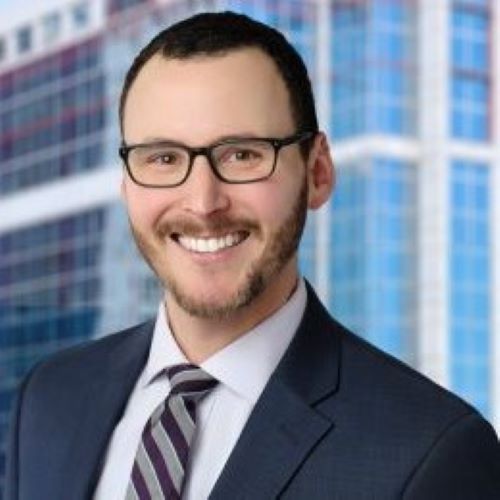
Adam G. Gutbezahl
is an attorney with the Boston law firm of Ruberto, Israel & Weiner, P.C. and is a member of the firm's Litigation Department and Commercial Real Estate and Employment Law Groups. Mr. Gutbezahl represents individuals and businesses in a wide variety of matters, including complex commercial, employment, land use, and real estate disputes. He has represented clients in trials, administrative hearings, and mediations, and maintains a keen eye to ensure the most favorable outcome for his clients. Mr. Gutbezahl has also authored an article entitled, "ChatGPT in the Workplace: Employers Beware". He earned his B.A. degree from George Washington University and his J.D. degree from The George Washington University Law School. Mr. Gutbezahl is a member of the Boston Bar Association, the Massachusetts Bar Association and the Massachusetts Real Estate Bar Association. In 2024, Adam was recognized as a Rising Star by SuperLawyers, as well as listed on the New England Real Estate Journal's "Ones to Watch - Rising Stars" list.
Speaker bio
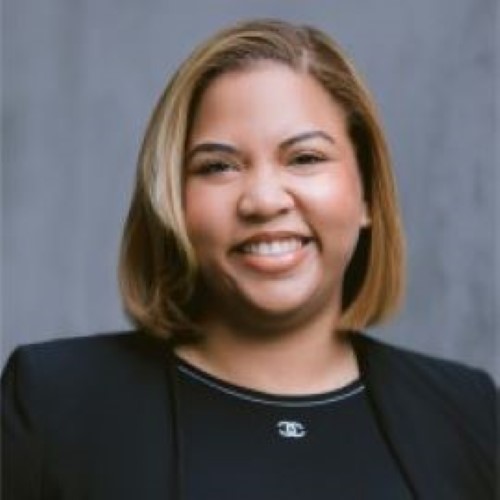
Leslie Veloz
is an associate at Hintze Law PLLC. She offers clients pragmatic and results-driven legal counsel on U.S. and international AI, privacy, and cybersecurity issues; as well as the establishment, integration, and management of effective privacy programs. Ms. Veloz provides guidance to a diverse range of clients from innovative startups to Fortune 100 corporations. Substantive areas of expertise include breach response, AI/ML risk assessment and mitigation, health privacy, privacy and security by design, vendor risk management, privacy assessments, internal privacy policies, joint controller and data processing agreements, external privacy notices, children privacy, U.S. state comprehensive and federal privacy laws, the GDPR, global incident response, and data breach notification. She earned her B.A. degree from University at Buffalo and her J.D. degree from Seton Hall University School of Law.
Speaker bio
Mark Stignani
is a partner in the Minneapolis office of Barnes & Thornburg LLP. He is the chair of the firm's data analytics practice group, and applies his intellectual curiosity, technical and research savvy, and penchant for innovation to create a broad spectrum of analytics and strategic review of clients' corporate transactions, reorganizations, and intellectual property endeavors. Mr. Stignani earned his J.D. degree from William Mitchell College of Law while working for Alliant Techsystems. He previously had completed postgraduate work in robotics and control systems at the University of Minnesota and National Technological University, while working at Honeywell, Inc. Further, Mr. Stignani is a certified information privacy professional (CIPP). He offers his insights through dozens of webinars annually, and serves as a regular lecturer at colleges and universities across the state of Minnesota. Mr. Stignani also is a frequent speaker at for various associations and conferences, including Reel Lawyer, Black Hills IP Analytics Series, LES International, and Practicing Law Institute.
Speaker bio
Andrew P. Sutton
is a member of McClane Middleton's Real Estate Practice and a member of the Cybersecurity and Privacy Group. He is a full service real estate attorney with expertise and experience across a wide variety of complex commercial real estate matters including: acquisitions and dispositions; financing; land use, permitting, and development; landlord and tenant leasing; property disputes; joint venture agreements and corporate structuring; historic rehabilitation tax credits; telecommunications; renewable energy installations; and cutting edge issues related to the digitization of real estate. Mr. Sutton regularly represents property owners, developers, investors, landlords, tenants, and financial institutions with respect complex negotiations and due diligence including the identification and resolution of title issues, environmental concerns, liens and entitlements. He has significant experience representing property owners before city councils, select boards, planning boards, zoning boards, and other municipal bodies. As a cybersecurity and privacy attorney, Mr. Sutton conducts risk assessments of clients' security controls and prepares reports that identify both vulnerabilities and strategies to address those vulnerabilities. He earned his J.D. degree, cum laude, from Boston University School of Law and his B.A. degree, magna cum laude, from Amherst College.
Top FAQs
When you enroll prior to the live event date you will receive access to the live-streaming webinar which will allow you to interact with faculty in real-time.
With each course, you will receive access to the content via OnDemand Streaming and the Video Download.
Course reference materials are included with each course purchase in a downloadable PDF format.
Courses are available within your account. Simply login to your account and click on My Courses. If you require additional assistance please call our Customer Service Department at 800-793-5274.
Closed captioning is available for all online live courses. Attendees may enable the closed captioning functionality within the event room once they have accessed the event by simply clicking the "cc" button in the lower right of the event room.
Yes, the more people you bring from your organization, the more you save. Please call out Customer Service Department to inquire about savings for your team at 800-793-5274.
The OnDemand Video will be available to stream within 14 days of live broadcast date. You will have access to the content for 6 months in your account.
If you're a subscriber, you'll have access to your course recordings until 7 days after the expiration date of the subscription.
Have more questions? Please Contact Us